

Hardscape & drainage · Collin County, TX
Concrete Walkways & Pads
New concrete walkways, side-yard and equipment pads, and small patios, laid out to fit the way you use your yard.
- Owner-run since 2021
- Based in Melissa, TX
- Free quotes
What's included
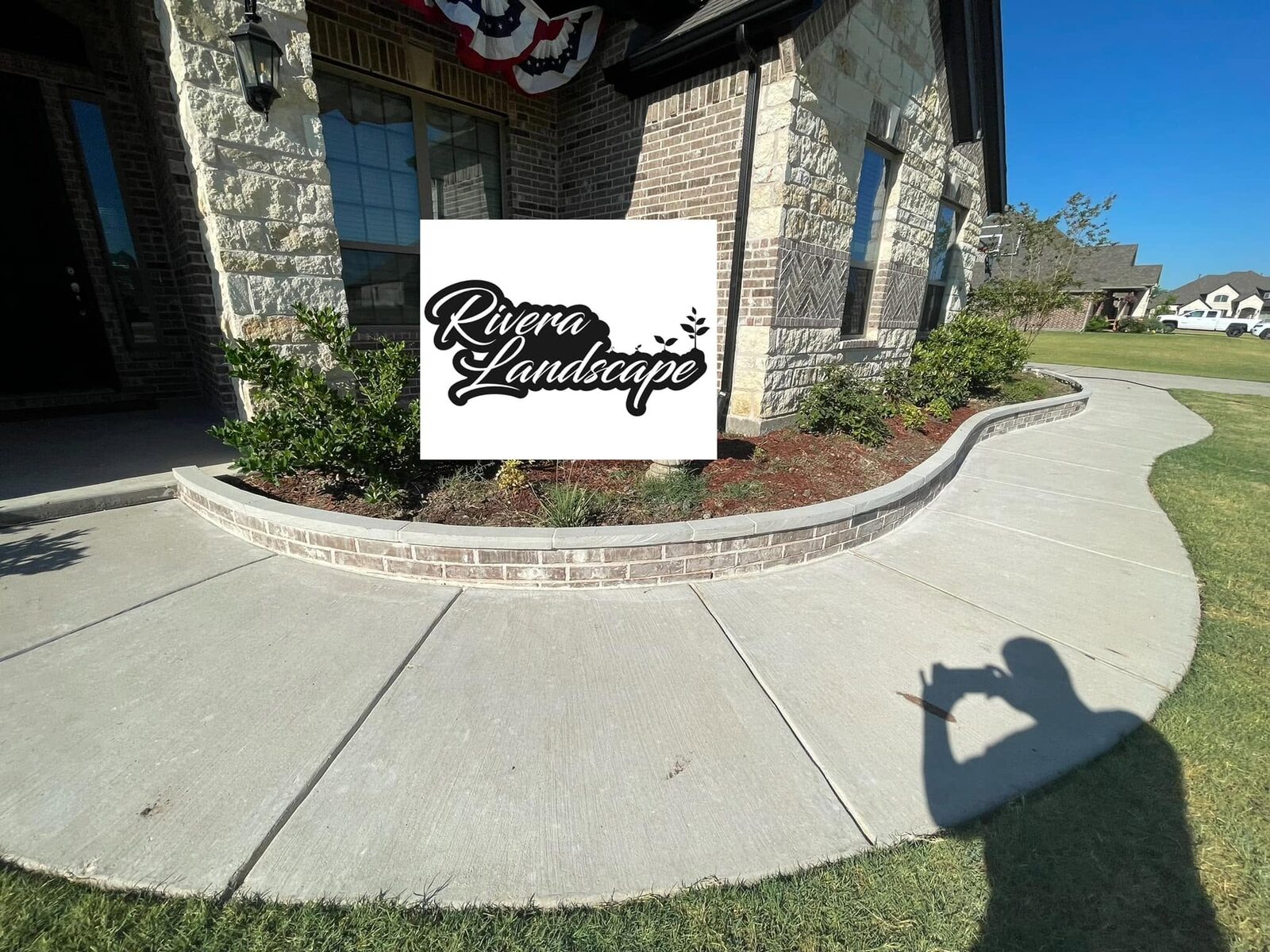
- Front and side walkways, including curved walks
- Extending an existing walk or patio
- Pads for trash cans, AC units, sheds and grills
- Small patios
- Stone or brick edging along new concrete
Cement or concrete?
You might have seen “cement installation” on our yard sign. Strictly speaking, cement is the gray powder; mixed with sand, gravel and water it becomes concrete, which is what we pour. Either way, this is the work: new walkways, pads and small patios around the house.
Walkways
The original builder walk on many homes runs straight from the driveway to the front door and nowhere else. A new curved walk can connect the front door to the sidewalk, wrap around a bed, or run down the side of the house to the backyard gate.
Walkways also solve wear problems. If there’s a dirt track across the lawn where everyone actually walks, that’s usually where the concrete should go.
Pads
Small pads do a lot of quiet work around a house. A pad beside the garage gives trash and recycling carts a level, clean home off the grass. A pad under an AC condenser keeps the unit level as the soil moves. Pads under sheds and grills keep them out of the mud and keep the grass from dying underneath. Each one is sized to what’s sitting on it, with a little room to spare.
Small patios
A small patio off the back door is often the best use of a corner of the yard that never grew good grass anyway. It gives you room for a table, a couple of chairs or a grill, and it can be framed with a stone border from our stone and hardscape work.
Building on clay
Concrete on blackland clay has one job beyond looking good: staying level while the ground swells and shrinks underneath it. The things that make the most difference are the parts you don’t see. The ground should be graded so water runs off the slab and away from the house, the base underneath should be compacted, the slab should be reinforced, and the control joints should be spaced so the slab cracks where it’s meant to.
Hot weather matters too. In a North Texas summer, concrete loses moisture fast, and a slab that dries too quickly cures weaker. Summer pours go best early in the morning, with the surface kept moist afterward.
Pairing with beds and stone
New concrete changes the edges of a yard. The beds along a new walk usually need reshaping, the lawn needs to be cut back to a clean line, and a stone or brick edging along the concrete gives the whole thing a finished look. If water already pools where you want the slab, sort out the drainage first.
We pour walkways, pads and patios for homes and commercial properties.
Questions we get
How soon can I walk on new concrete?
Light foot traffic is usually fine after a day or two, depending on the weather. Heavier loads, like a loaded wheelbarrow or a shed, should wait longer. Concrete keeps gaining strength for weeks and reaches its design strength at around 28 days.
Why does concrete crack, and can it be prevented?
All concrete shrinks as it cures, and on clay the ground underneath moves with the seasons too. Control joints, the cut lines across a slab, give the concrete a planned place to crack so it doesn't crack at random. A compacted base and steel reinforcement keep any cracks that do form tight and level.
Do I need a permit for a walkway or patio?
It depends on your city and where the concrete goes. Work in the city right-of-way, like a public sidewalk or a driveway approach, almost always needs a permit, and many HOAs want to approve patios and walkways in front yards. Check with both before you plan the project.
Concrete or pavers for a walkway?
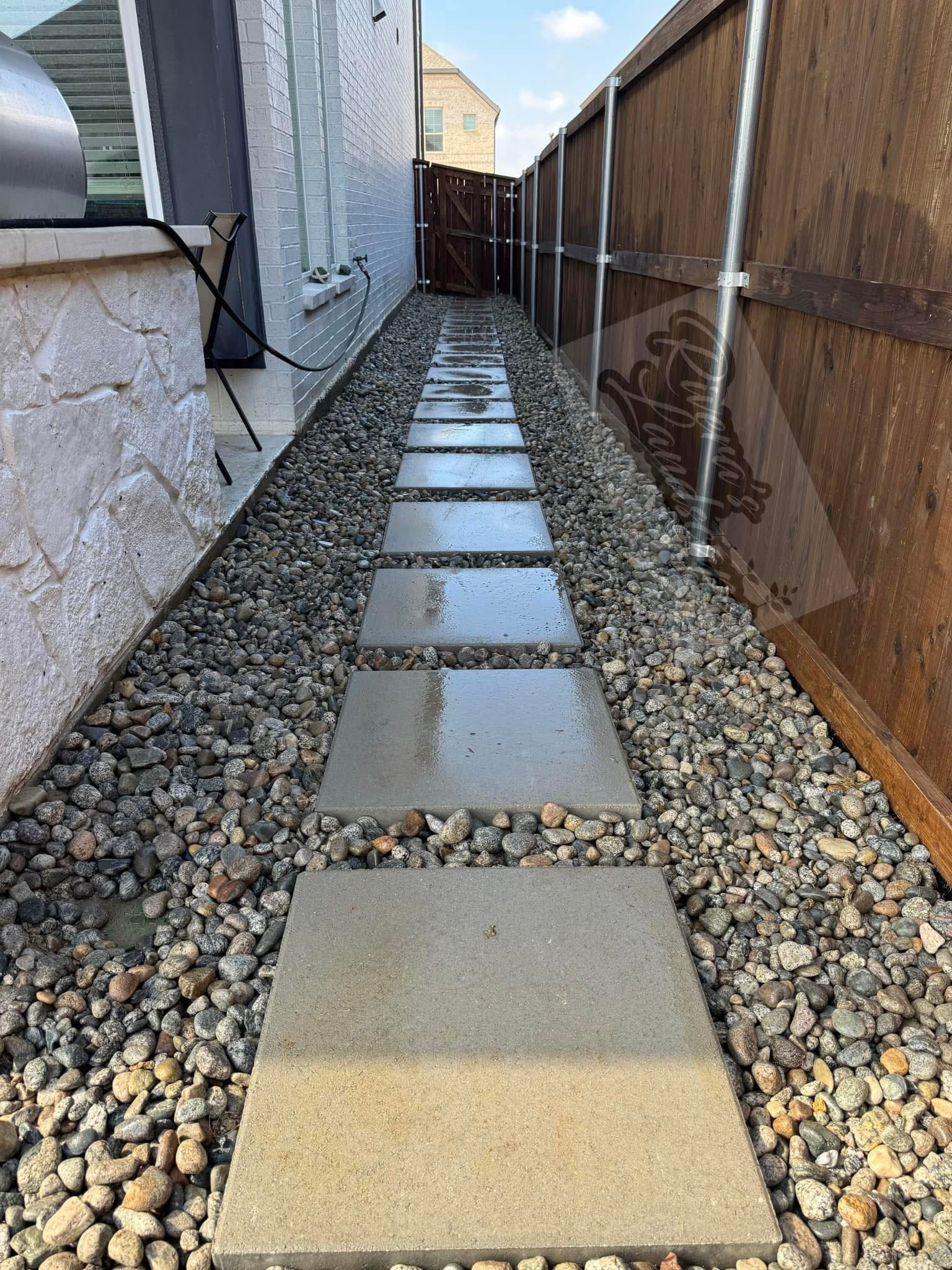
Concrete is a single smooth surface that's easy to walk, shovel and roll a cart across. Pavers or stepping stones set in gravel let water drain through and are easier to lift and relevel if the ground shifts. Front walks and pads usually suit concrete; side yards and garden paths often suit pavers.
Where we do this
We're based in Melissa and work across McKinney, Frisco, The Colony, Anna, Celina and Prosper.
Related services
All services-
Stone & Hardscape
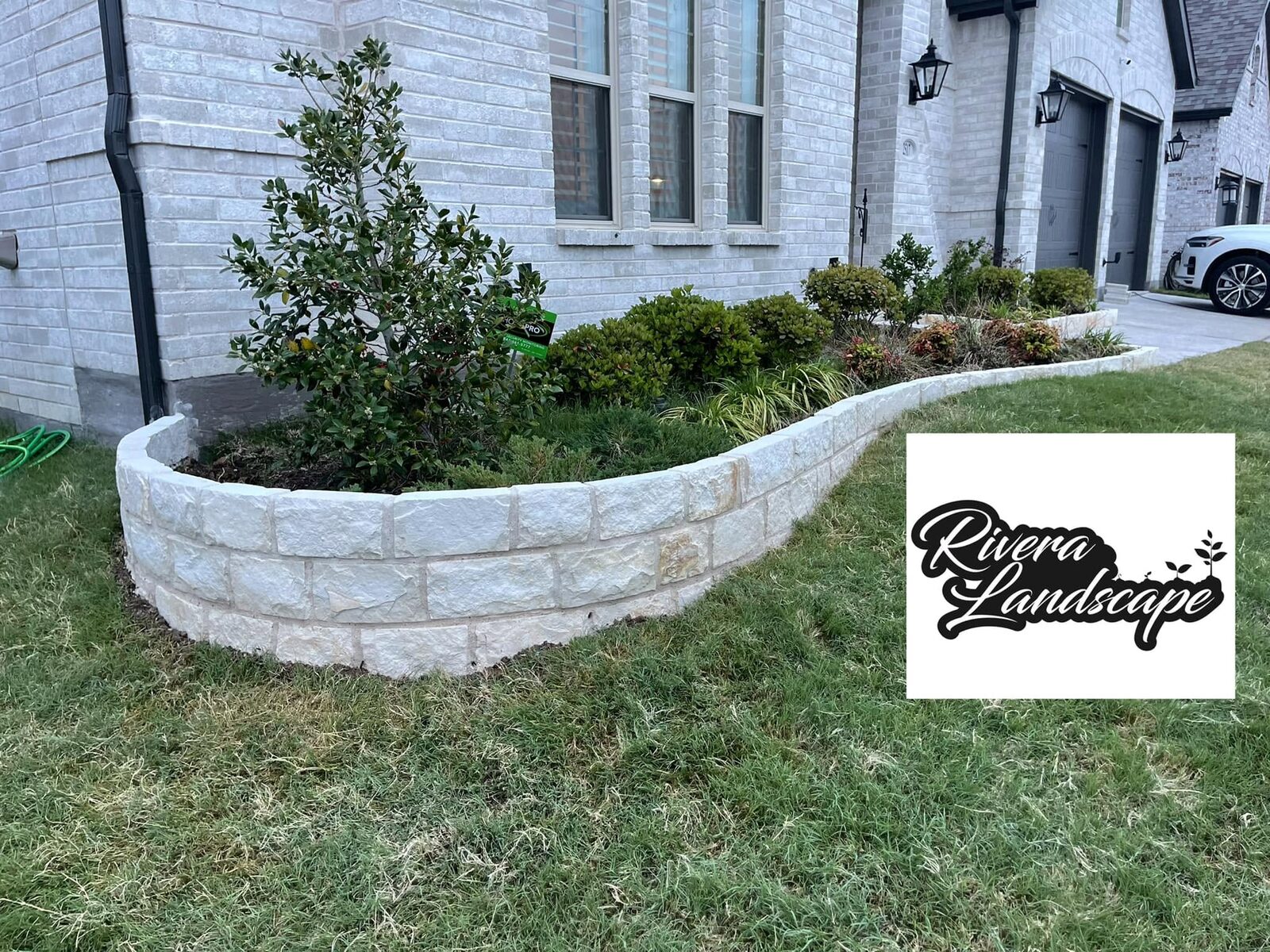
Stone bed borders, tree rings, Austin stone mailbox rebuilds and gravel or paver paths, built to hold their line on North Texas clay. View service -
French Drains & Drainage
French drains and side-yard drainage for yards where water pools on heavy clay soil. View service -

Lawn Care & Mowing
Mowing, trimming, edging and blowing, cut at the right height for your Bermuda, St. Augustine or Zoysia lawn. View service